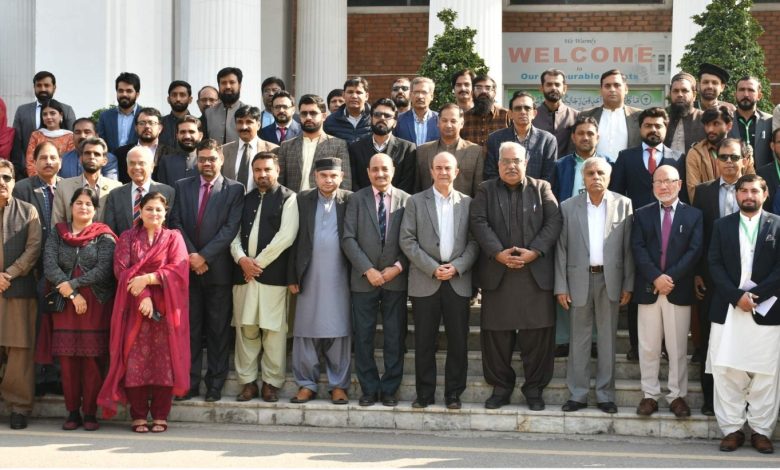
The 9th International Conference of the Phytopathological Society concluded at Pir Mehr Ali Shah Arid Agriculture University Rawalpindi after three days of intensive scientific dialogue focused on combating plant diseases amid shifting climate patterns. Delegates emphasized that climate resilience must become central to national and international strategies for protecting crops and sustaining food supplies.
Prof. Dr. Qamar-uz-Zaman, Vice Chancellor of PMAS-AAUR, described the gathering under the theme Combating Plant Pathogens in Changing Climate for Sustainable Food Security as timely for Pakistan, noting that warming trends and altered weather events are changing pathogen ranges and increasing risks to farmers across the country. He called for strengthened collaborative research to translate scientific findings into resilient farming practices suited to Pakistan’s arid and semi-arid landscapes.
The conference opened with remarks from Prof. Dr. Mohammad Akmal, Chairman of the Pakistan Science Foundation, while the closing session featured Dr. Liaqat Ali Khan, Project Director Green AI, who urged innovation and practical tools to help producers manage emerging threats. Speakers from Pakistan and abroad highlighted how data-driven surveillance, resistant crop varieties, and integrated management approaches can advance climate resilience in plant health systems.
Held in a hybrid format, the event enabled global experts to participate onsite or virtually, facilitating knowledge exchange across borders. Presentations and panel discussions examined how accelerating climate change is reshaping disease dynamics, enabling pathogens to expand into new regions and intensify pressure on yields, and stressed the need for coordinated research and policy responses to build resilience.
Across technical sessions, poster displays and an exhibition, researchers, industry representatives and policymakers explored practical solutions ranging from diagnostic tools to climate-smart crop management. The dialogue reinforced that investment in plant pathology research and international partnerships will be critical to safeguard Pakistan’s agricultural productivity and broader food security in a changing climate.
Participants left the conference with a shared sense of urgency and a clear message: advancing climate resilience through science-led collaboration and on-farm adaptation measures is essential to protect farmers, secure supply chains and sustain the nation’s food systems.