Gender-Based Quota in PIMS Nursing Admissions Sparks Legal and Constitutional Concerns
Nadeem Tanoli
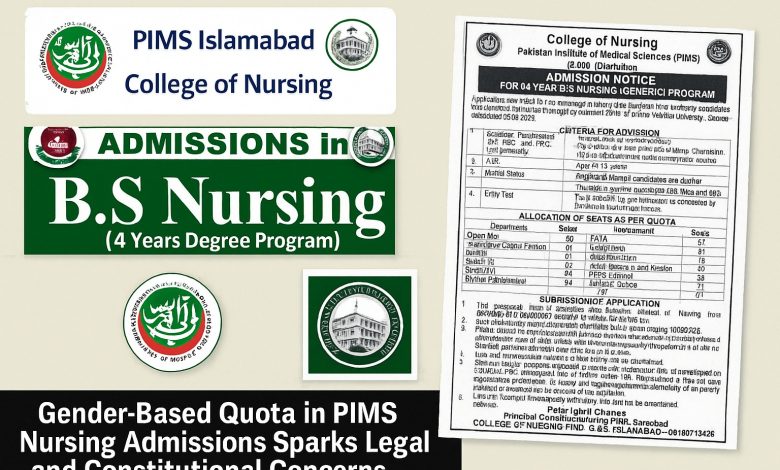
Islamabad: The Pakistan Institute of Medical Sciences (PIMS) has come under scrutiny after its College of Nursing announced admissions for a four-year B.S. Nursing (Generic) program, reserving 90 percent of seats for female candidates and just 10 percent for males. This gender-based quota has raised significant legal and constitutional concerns over its validity and fairness, especially given explicit national guidelines promoting open merit.
The Pakistan Nursing and Midwifery Council (PNMC), the main regulatory body for nursing education, requires that admissions into Bachelor of Science in Nursing (BSN) programs be conducted strictly on open merit, without any gender-based allocation. PNMC regulations underline equal opportunity for all applicants, making the PIMS policy appear inconsistent with both regulatory directives and best practices in the field.
Experts in law point to Pakistan’s Constitution, specifically Article 25, which guarantees equality before the law and prohibits discrimination on the basis of sex. Legal analysts stress that unless a policy is designed as a special provision for women or children, restricting educational opportunities based on gender is not permissible. Further, Articles 25A and 37 mandate equal access to education for all and fairness in public sector recruitment and admissions.
Despite these legal safeguards, PIMS has reserved 45 seats for female students and only 5 for males. Observers note that while this may reflect a longstanding tradition in nursing education, such practices are considered outdated in light of recent legal and regulatory updates. The 2023 amendments to the PNMC Act reinforced the commitment to standardization and open merit in nursing admissions, significantly narrowing the scope for arbitrary quotas.
The announcement has generated frustration among male applicants who feel qualified male candidates are unfairly excluded from consideration. Advocacy groups and legal professionals argue that students affected by the policy have strong grounds to seek redress, either by lodging complaints with the PNMC or pursuing legal action through writ petitions in the High Court.
This controversy underscores a broader issue facing educational institutions: the need to reconcile institutional practices with clear constitutional mandates and regulatory standards.