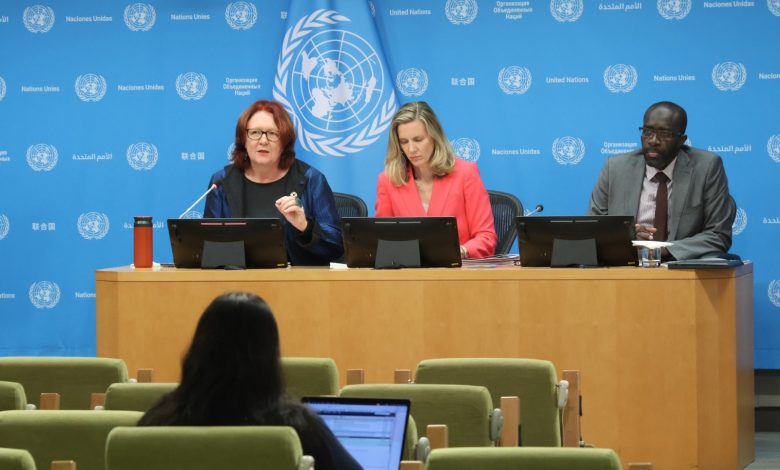
A new UN report warns that targeted investments in gender equality — especially closing the gender digital divide — could deliver large social and economic gains, including an estimated $1.5 trillion boost to global GDP and the potential to lift 30 million women out of poverty. The Gender Snapshot 2025, produced by UN Women and the UN Department of Economic and Social Affairs, documents both hard-won progress and growing threats to women’s rights, and lays out priority actions to accelerate progress on the Sustainable Development Goals.
The report highlights important advances: girls are completing school at higher rates than before, and maternal mortality has fallen sharply. Legal and policy reforms have accelerated recently, with nearly 100 new or reformed laws aimed at tearing down discrimination in the past five years. Women’s participation and leadership in climate negotiations has doubled, showing that where equality is prioritized, societies and economies benefit.
Data in the report show that comprehensive national responses to violence against women — including laws, policies, services, research and dedicated budgets — are associated with much lower rates of intimate partner violence. Countries with robust measures record rates roughly 2.5 times lower than those with weak protections. The authors note that closing the gender digital divide alone could directly benefit an estimated 343.5 million women and girls worldwide.
Despite these gains, the snapshot warns of an unprecedented backlash that is eroding progress. Civic space for women’s rights is shrinking and funding for gender equality initiatives is declining. Conflict is increasingly deadly for women and girls: the report finds a record high number living within reach of deadly conflict. Food insecurity is also rising for women, with tens of millions more female adults experiencing moderate or severe food insecurity than men. If current trends continue, the world is on track to have hundreds of millions of women and girls living in extreme poverty by 2030.
The report emphasizes that reversing these negative trends is possible with accelerated, targeted action. Investments focused on care systems, education, the green economy, labour markets and social protection could reduce the number of women and girls in extreme poverty by an estimated 110 million by 2050, unlocking substantial economic returns. UN officials stress that closing gaps in the digital sphere, scaling up protections against violence, and expanding women’s leadership are among the high-impact priorities.
Gender Snapshot 2025 draws on more than 100 data sources to track progress on gender equality across all 17 Sustainable Development Goals. With five years remaining to meet the 2030 Agenda, the report finds the world is currently on course to miss every indicator under SDG 5, the goal dedicated to gender equality, unless action is urgently accelerated.
To guide that acceleration, the report anchors the Beijing+30 Action Agenda, which identifies six priority areas for immediate focus: freedom from poverty, zero violence, equal power and leadership, climate justice, peace and security, and full participation in the digital revolution. Amplifying the voices of young women and girls is highlighted as a cross-cutting imperative. UN leaders are calling on governments and partners to make concrete commitments and investments to scale up women’s rights and share the benefits widely.
UN Women leads the UN system’s work on gender equality and the empowerment of women and girls, working to change laws, institutions, social norms and services to close gender gaps. The UN Department of Economic and Social Affairs supports implementation of the 2030 Agenda by helping countries translate global commitments into national policies and programs across economic, social and environmental areas.