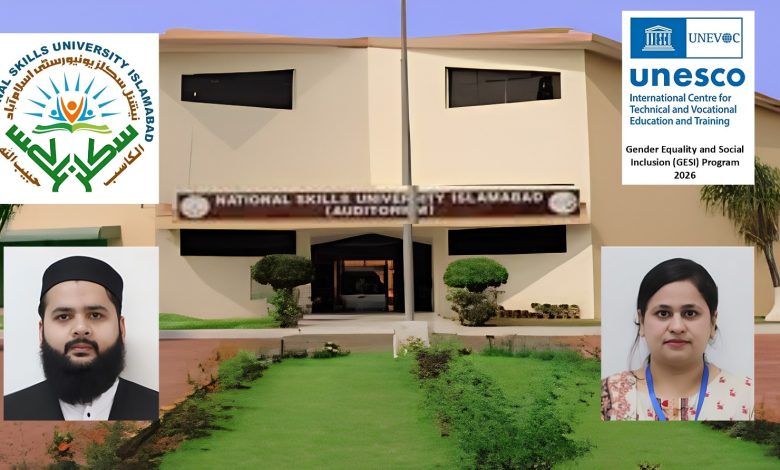
The UNESCO-UNEVOC International Center for TVET has appointed two academics from National Skills University Islamabad as Gender Equality and Social Inclusion (GESI) Focal Points after their successful completion of the 2026 GESI Program. The designation underscores growing international recognition of Pakistan’s efforts to strengthen inclusive, skills-based education and the central role of Gender equality TVET in those reforms.
Dr. Maryam Subhani and Mr. Muhammad Bin Qasim will act as institutional champions, tasked with integrating inclusion principles into policies, academic programs and training practices. Their duties include serving as primary points of contact for inclusion-related initiatives, supporting collaborative research and peer learning, and overseeing pilot projects designed to broaden access for underrepresented learners.
UNESCO-UNEVOC highlighted that the appointments reflect the representatives’ strong participation in the program and position them to support stronger, more equitable TVET systems at national, regional and global levels. The move aligns with United Nations Sustainable Development Goals on quality education, gender equality and reduced inequalities, and comes as education systems worldwide face rising pressure to eliminate barriers to participation.
The Founding Vice Chancellor, Prof. Dr. Muhammad Mukhtar, congratulated the nominees and the entire NSU community, noting that this recognition strengthens Pakistan’s voice in international conversations on inclusive technical education. The appointment reinforces National Skills University Islamabad’s growing engagement with global partners to promote Gender equality TVET across emerging economic sectors.
By embedding GESI principles into institutional practice and fostering international collaboration, the new focal points are expected to open broader opportunities for women, marginalized communities and other underrepresented groups. Their leadership and expertise are anticipated to drive practical reforms, pilot initiatives and knowledge exchange that advance inclusive skills development within Pakistan and across the UNEVOC network.